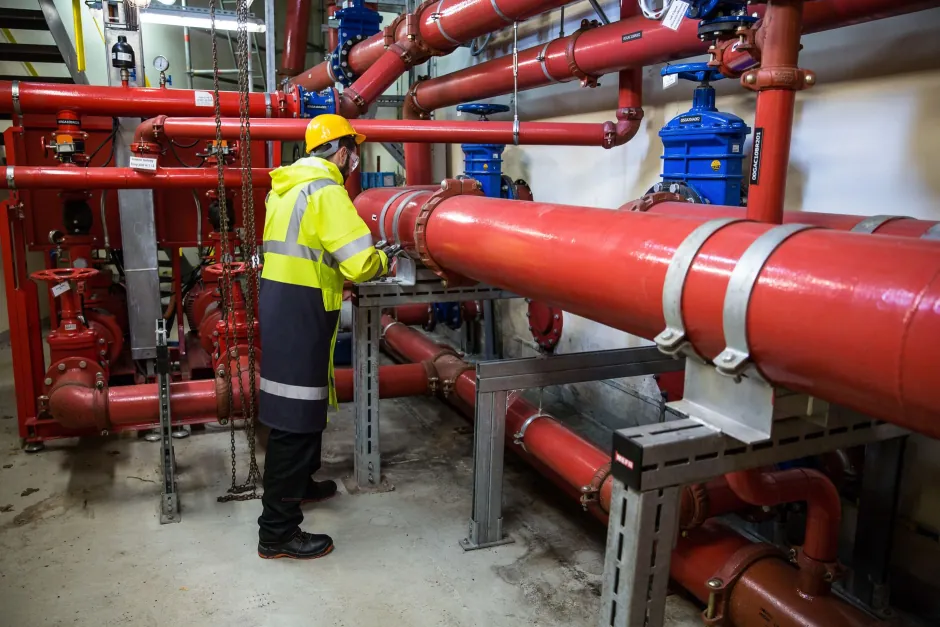
Traced with equipment before anything is opened, including under a slab, where the fault frequently announces itself as a warm patch on the floor.
Online Now!·--:--
Most hidden leaks are unhelpful. They surface somewhere other than where they started, or they never surface at all and the only clue is a bill. There is one exception, and on slab-on-ground housing it is worth knowing about.
If a hot water line running within or beneath the slab starts leaking, the water is heated and the concrete conducts. The warmth reaches the surface, and you get a patch of floor that is noticeably warmer than the rest. Bare feet in the morning is how most people find it.
That is unusually generous, because it points at the location rather than merely announcing that something is wrong. The supporting signs are worth knowing too: a sound of running water with every tap closed, a hot water system cycling more than it used to, and a bill that has risen with nothing visibly wet anywhere.
None of that means concrete has to come up. It means it gets located precisely first, with acoustic listening, pressure testing on the hot and cold lines separately, and thermal imaging. Only then is it worth discussing whether the answer is opening one small area or abandoning that run and re-routing it.


Do not wait for it to get wet. That is the most useful symptom a hidden leak ever gives you, and it is worth acting on while it is still just warm.
A leaking hot water line under concrete warms the floor above it.
It is one of the few faults that points at its own location.
A sound that should not be there is a real symptom, not imagination.
Worth listening for at night when the house is quiet.
Hot water being lost is hot water being reheated.
That shows up as the unit working harder for no apparent reason.
Not a first one, and never before the leak has been located precisely.
Re-routing the affected run is sometimes the better answer entirely.
Everything off, and a moving dial means water is genuinely leaving.
Under a slab it can do that for a long time without surfacing.
Fixed price agreed before anything starts. These are indicative 2026 ranges.
Water stopped and the situation stabilised, at any hour.
Acoustic, pressure and thermal, with nothing cut into concrete to find it.
The same approach, for a leak that is not under the slab.
Depending on the pipe, the material and how it has to be reached.
Where abandoning the line under the slab is the better answer than opening it.

Whether the house is on a slab and whether any part of the floor is warm. Those two answers narrow it enormously before anybody arrives.

Acoustic listening, pressure testing on hot and cold separately, and thermal imaging over the suspect area.

Open one small area, or abandon the run and re-route it. Both get priced so you are choosing rather than being told.

What failed, where, and what it took, at the figure agreed before we started.
Shut it off at the meter and ring. A licensed plumber can be heading toward you while you are still on the call.
Call 1300 381 569
What Seven Hills locals ask us before booking a plumber.
Ask us yours
On a house built on a concrete slab, that is one of the clearest signs there is of a leaking hot water line running within or beneath the slab. The water is heated, the slab conducts, and the warmth reaches the surface above the leak. It is one of the few plumbing faults that genuinely tells you where it is.
A sound of running water when every tap is closed. A hot water system that cycles more than it used to. A water bill that has climbed with nothing visibly wet. And in some cases a damp patch appearing at the edge of the floor where the slab meets a wall.
Not necessarily, and not until it has been located precisely. Depending on where the line runs and what it serves, the options can include locating and opening one small area, or abandoning the affected run and re-routing it above ground or through the roof space. We would rather set both out than assume.
Acoustic listening, pressure testing on the isolated hot and cold lines separately, and thermal imaging, which on a warm slab leak is particularly effective. The point of all of it is to be certain before any concrete is touched.
Turn the water off at the meter before anything else, then ring. How much a burst costs is largely decided by how long the supply stayed on.
Yes. Close every tap and appliance and watch the smallest dial on the meter. If it creeps, water is genuinely leaving somewhere on your side, and under a slab it can do that for a long time without ever showing at the surface.
Locating a slab leak is $350 to $700. Locating a concealed leak generally is $250 to $600. A burst repair is $300 to $900. Re-routing an affected run is quoted once it is located.
Tell us whether the house is on a slab and whether any part of the floor feels warm. If the answer to the second is yes, that is most of the diagnosis already done.
Located with equipment, opened only where it must be, and re-routed where that is better.
Online Now!·--:--